


Russian Federation
As one of the world’s most influential museums, the Louvre, in its history and cultural role, profoundly reflects the evolution of political, social and artistic concepts in France and Europe. This paper aims to explore how it has gradually established itself as a symbol of the “world cultural palace” through spatial reconstruction, collections accumulation and ideological strengthening. The study shows that the Louvre is positioned not only as a place for collecting and displaying exhibits, but also as a carrier of national memory and a platform for inter-civilizational dialogue.
Louvre Museum, international cultural exchange, cultural diplomacy, digital transformation, cultural heritage
In the context of globalization and the digital age, the Louvre has expanded its cultural influence through strategies such as overseas branches (like the Louvre ABU Dhabi) and virtual exhibitions. However, its core positioning still needs to strike a balance between the authority of the "temple of art" and the demand for "democratization of culture". After the pandemic, the Louvre has been more actively exploring narrative models that integrate online and offline, rethinking the relationship between physical space and digital experience.
The historical axis of the Louvre clearly Outlines France's own political trajectory from absolute monarchy to democratic republic. The Louvre Castle, which was built at the end of the 12th century, began its art collection during the reign of Francis I, but the real milestone of its transformation was the French Revolution. In 1793, the National Assembly declared that it would be transformed into the "Central Museum of Art" and opened to the public. The act itself was revolutionary: it transformed the art treasures that were originally the private property of the royal family into the common heritage of the "French nation", marking the transfer of cultural rights from the privileged class to the general public. During the Napoleonic era, with a flood of artworks coming from military conquests, the Louvre was once renamed the "Napoleon Museum", and its global ambitions for collecting began to emerge. After the systematic expansion in the 19th century and the modern intervention of Ieoh Ming Pei's glass pyramid in the 20th century, the Louvre finally completed its complete transformation from a symbol of monarchy to a public cultural institution. The evolution of its architecture and institution itself is a condensed history of French political culture [1].
The Central Gallery of the Louvre opened its doors to the Parisian people on August 10, 1793. The former royal sanctuary became the "Central Museum of Fine Arts of the French Republic". Crowds flocked to the promenade, gazing at the treasures that once belonged only to the Bourbon family - not just the opening of the museum, but a solemn declaration of cultural sovereignty by a new republic.
The transformation of the Louvre is a history of the transfer of power. As a building, it began as a defensive fortress in the 12th century and became a grand palace in the hands of Louis XIV, the Sun King, highlighting absolute monarchy. The artworks displayed in the promenade are the sum of the glory of the monarchy, the taste of the nobility and the spoils of conquest. When Louis XIV moved to Versailles, the Louvre fell silent for a while and thus became a vessel for the fermentation of the Enlightenment. Philosophers such as Diderot were the first to conceive of a "national treasure house" open to the public, placing the private property of art under rational scrutiny.
The great waves of the French Revolution eventually broke the thousand-year covenant between the monarchy and art. The National Assembly declared in 1791: "The royal collection belongs to the people." Two years later, the Louvre changed its response. At the core of this transformation was the replacement of "subjects" and "Kings" with the concept of "citizens". Art is no longer an object of admiration, but a public resource that enlightens the mind and shapes the virtues of the republic. While the Napoleonic era enriched its collection with spoils of war and renamed the museum "Napoleon Museum" to reinforce the narrative of the empire's conquest, it objectively consolidated the modern model of the museum as a symbol of national power and cultural prestige.
In the 19th century, the Louvre completed its transformation from "palace" to "institution" through continuous architectural expansion and systematization of its collection. It became a figurative classroom of art history, and the classification of its exhibition halls and the route of its visit itself is a history of civilization written in space. More importantly, it has been given the sacred duty of building the national identity of France - from the Victory of Samothrace to the Mona Lisa, the museum's treasures have been elevated to the cultural totems of the nation.
In 1989, the glass pyramid designed by Ieoh Ming Pei was completed, sparking intense debate around the world. This modernist entrance, in a highly tense manner, heralds the Louvre's final identity leap: from the palace of the nation-state to the crossroads of world civilization. It is no longer just French, but belongs to all mankind. It must deal with the legacy disputes of colonial history, welcome a global audience, and redefine the value of physical museums in the digital age.
So the historical axis of the Louvre clearly Outlines France's own political trajectory from absolute monarchy to democratic republic. The Louvre Castle, which was built at the end of the 12th century, began its art collection during the reign of Francis I, but the real milestone of its transformation was the French Revolution. In 1793, the National Assembly declared that it would be transformed into the "Central Museum of Art" and opened to the public. The act itself was revolutionary: it transformed the art treasures that were originally the private property of the royal family into the common heritage of the "French nation", marking the transfer of cultural rights from the privileged class to the general public. During the Napoleonic era, with a flood of artworks coming from military conquests, the Louvre was once renamed the "Napoleon Museum", and its global ambitions for collecting began to emerge. After the systematic expansion in the 19th century and the modern intervention of Ieoh Ming Pei's glass pyramid in the 20th century, the Louvre finally completed its complete transformation from a symbol of monarchy to a public cultural institution. The evolution of its architecture and institution itself is a condensed history of French political culture [1].
The story of the Louvre proves that the greatest museum is always the one that redefines itself to a wider public.
The Louvre is a physical monument to the memory of the French nation. Since its birth as a fortress in 1190, it has been deeply intertwined with the historical context of France. From the introduction of Italian art treasures by Francis I during the Renaissance to becoming a showcase of the glory of the monarchy during the reign of Louis XIV, the Louvre has always been a projection of national will and cultural ambition. The building itself is a layered history of French architecture, witnessing the dialogue and coexistence of Gothic, Renaissance, classicism and modern glass pyramids.
As the highest hall, it is not only a place of collection, but also a production center of meaning. The core thread of the collection - from "Venus de Milo" to "Liberty Leading the People" - is systematically woven into a grand narrative about "France": it symbolizes the succession from classical rational harmony to modern revolutionary spirit, establishing France's cultural identity as the core inheritor and innovator of European civilization. The Louvre, with its unparalleled collection authority and spatial narrative, has become the cornerstone of French cultural identity and the sanctuary of national aesthetic education.
So beyond national boundaries, the Louvre has long positioned itself as the guardian and interpreter of the common heritage of mankind. Its collection encompasses masterpieces of art from ancient Mesopotamia, Egypt, Greece and Rome, Islamic civilization to Europe, forming a visualized "global history" that transcends time, space, region and civilization. This encyclopedic collection pattern embodies the universalist ideal since the Enlightenment, that is, to understand the trajectory of the entire human civilization through art.
As a guardian, its role is filled with the complex tension of modernity. On the one hand, it actively takes on the international responsibility of preserving and showcasing multiculturalism through measures such as the restoration and protection of artifacts with cutting-edge technology and the establishment of the Islamic Arts Department; On the other hand, its large collection, which originated from colonial and imperial expansion history, inevitably places it at the center of controversy over cultural ownership and return. This has prompted the Louvre to constantly reflect on its ethical positioning and explore new models of cultural heritage sharing and dialogue in cross-border collaborations such as the ABU Dhabi branch.
Today, the Louvre is both a "mirror of the nation" that embodies the spirit of France and a "window of the world" that reflects human civilization. Its glass pyramid entrance is a perfect metaphor for this dual identity: embedded in the historical body in a modern form and open to the world. It symbolizes the transformation of cultural institutions from authoritative monopolists to reflective public forums and civilizational hubs that, while preserving history, continue to engage in a global dialogue about cultural values, memory and belonging.
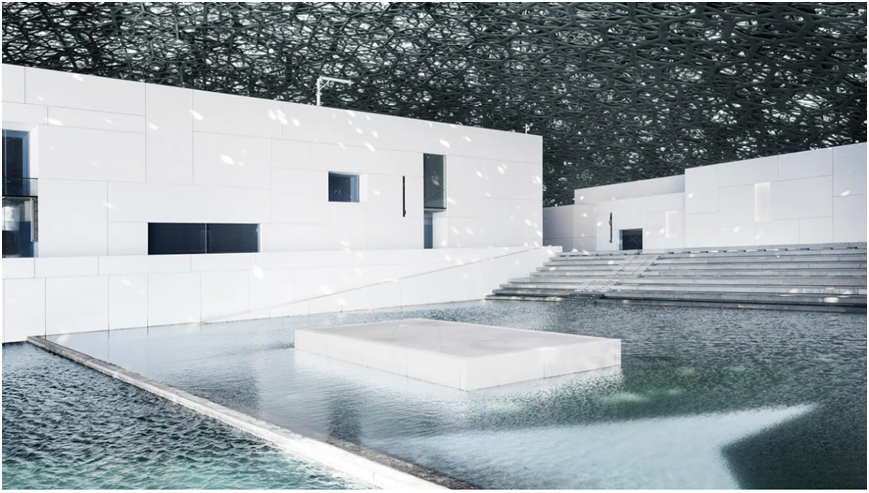
Image from the Louvre Museum official website.
Изображение с официального сайта Лувра.
Solet's take a look at what measures the Louvre has taken in international cultural exchange. First ofall the Louvre's international touring exhibitions are one of the core strategies of its "cultural diplomacy". Since 2000, the Louvre has curated nearly 200 international Tours covering more than 50 countries around the world. The most representative of these are the preheating exhibitions of the "Louvre in ABU Dhabi" series from 2013 to 2015, which were not only held in the United Arab Emirates but also toured in Japan, India and other places, laying the foundation for later branch construction [2].
The 2022 exhibition "Leonardo Da Vinci and Milan during the Renaissance" at the Tokyo National Museum demonstrated the academic depth of the exhibition through scientific analysis reports on the Louvre's research in art conservation [3].
The curatorial strategy of the touring exhibition has notable features:
Thematic adaptability: Adjust the exhibition narrative according to the cultural context of the target region. Such as strengthening the theme of East-West dialogue at exhibitions in Asia
Academic accompaniment: Each exhibition is accompanied by academic catalogues in French, English and the local language
Educational Extension: Develop complementary courses in collaboration with local educational institutions
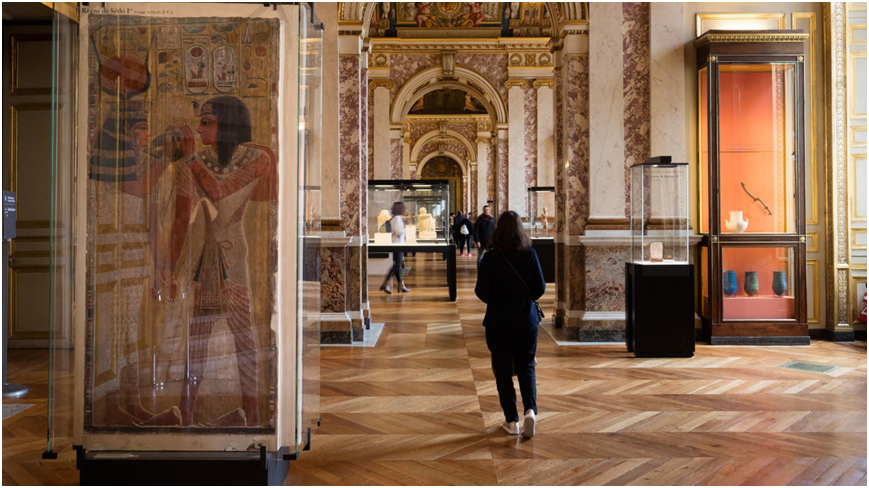
Image from the Louvre Museum official website.
Изображение с официального сайта Лувра.
And there are international Loan exhibitions and joint archaeological projects. For example the Louvre has long engaged in in-depth cultural relic loan exhibitions and joint archaeological research with countries such as Egypt, Italy and Iran. For example, in collaboration with the Egyptian Ministry of Antiquities, not only has the collection been lent out for special exhibitions on ancient Egyptian civilization, but also teams of experts have been sent to participate in archaeological excavations and conservation in Egypt. This model of "knowledge exchange" based on equal academic cooperation goes beyond one-way cultural export, builds long-term trust and professional ties, and deepens cultural exchange from "the flow of things" to "collaboration of people" and "sharing of technology".
The Louvre's international loan exhibition network covers over 120 museums worldwide and has established a complete system for the safe transportation and insurance of its collections. The Louvre & Palace Museum Protocol, 2018, involved not only the exchange of exhibits with the Palace Museum in Beijing in 2019, but also mutual visits and training of heritage conservation experts.
The joint archaeological project demonstrated a deeper level of academic collaboration:
Egypt Project: Since 2012, the Louvre and the Egyptian Ministry of Antiquities have been conducting continuous excavations at the Saqqara site, sharing the findings. The research results of the ancient Egyptian workshop site discovered here in 2021 were jointly published by scholars from both sides [4]
Central Asia Project: Research on Silk Road sites in collaboration with the Institute of Archaeology of the Academy of Sciences of Uzbekistan, with a particular breakthrough in the material exchange of Sogdian culture
Research on the Origin of Collections: Collaborating with museums in Cambodia, Nigeria and other countries to jointly study the origin of related artifacts in their collections and establish transparent archives of collections [5]
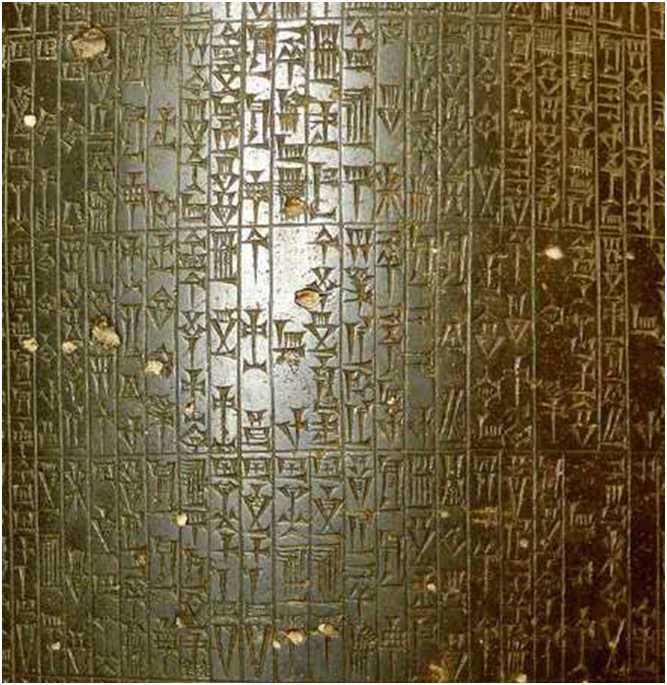
Image from Sina Blog "Shan Hai Zhi You".
Изображение из аккаунта Sina Weibo «客山海挚友».
And in 2012, the Louvre spent a huge amount of money to expand and reopen its gallery of Islamic Art. This move is widely interpreted as a major cultural project in the post-9/11 era by the French authorities to reconstruct the image of Islamic civilization and promote mutual understanding between the Christian world and the Islamic world through the museum, an elegant cultural venue. It shows that the curatorial act of the Louvre itself is a profound dialogue on international political and social issues.
Followed by digitalization and global cultural promotion.first of allOnline collection database and Virtual Tours.The Louvre's digitalization project began in 2004, and the Louvre Online Database (Collections.louvre.fr) now contains detailed information on more than 480,000 items. The Louvre's online database contains over 482,000 items and offers high-resolution images for free download to the public [5].
Features of the database include:
1. Multilingual support: Offers interfaces in five languages: French, English, Spanish, Chinese, and Arabic
2. Academic Depth: Each collection entry contains complete bibliographic information, restoration history, exhibition records, and references
3. Open Access: Under the CC0 license, the highest resolution images can be used for educational and research purposes without authorization
Virtual tour systems have accelerated since the pandemic, with the "Immersive Louvre" project launched in 2021 using 360-degree panoramas and VR technology to develop seven themed virtual tour routes. The Napoleon Suite VR Tour, in collaboration with the French National Center for Scientific Research, recreates the historical furnishings and soundscapes of the rooms [7].
Followed by social Media and Digital Education Program.However, in this regardThe Louvre's social media matrix covers major global platforms and adopts differentiated strategies for different regions:
Instagram: Focusing on visual narrative, the "One Work, One Story" series of short videos released in 2023 received over 15 million global views in a single month
wechat: Developed a mini-program called "Voice of the Louvre" for the Chinese market, offering Mandarin audio guides and localized cultural interpretations
TikTok: Working with young artists to create short video content that enables dialogue between classical art and pop culture
So in terms of digital education programs, The MOOC project has attracted millions of registered learners from more than 190 countries [8]. A teacher resource platform for primary and secondary school educators, which offers customizable teaching modules and supports downloads in 30 languages, was downloaded 870,000 times in 2022.
It is particularly worth mentioning the "Global Campus Partnership Program" launched in 2023, which has established digital education partnerships with universities in 12 developing countries. Through remote lectures, virtual internships, and digital resource sharing, The Louvre Museum, through its “Global Campus” initiative, has established a network of universities in many countries to promote equitable access to cultural education [9].
And as a formulator of expertise and industry standards, global talent development and standard output: The Louvre Academy, affiliated with the Louvre, is one of the world's most renowned institutions for art history and museology education, and has trained a large number of professionals globally (especially in non-Western countries). Through this educational output, the Louvre actually spreads French art history research methods, cultural relic restoration techniques and museum management concepts in the global museum field, thereby subtly shaping the professional standards of the international museum industry.
So as the most visited museum in the world, the Louvre has long transcended the realm of mere art collection and display. It is not only the sanctuary of France's cultural heritage, but also plays a complex and crucial role in the global cultural map.
In an era of globalization and multiculturalism, one of the core functions of the Louvre is to build a platform for dialogue that transcends the barriers of civilizations. Rather than simply incorporating the "other" culture into the Western perspective of the exhibition framework, it attempts to promote deeper understanding and empathy by creating specific cultural Spaces and narrative strategies.
And it referenced the "third space" theory. What does that mean? The concept of the "third space" proposed by cultural theorist Homi Baba refers to a hybrid, consultative cultural field where different systems of cultural meaning meet, collide and generate new understandings. The Louvre consciously constructs such a "third space" through its curatorial practice and spatial design.
First of all, its exhibition layout breaks the strict linear narrative of geography and chronology. For example, in the exhibition hall of the Islamic Art Department, artifacts from Spain, the Middle East, and South Asia are placed side by side, highlighting the exchange and mutual influence among cultures (such as the influence of Arab patterns on European medieval art), rather than emphasizing the essential differences. This juxtaposition forces visitors to think about the historical connections and dynamic interactions between cultures, rather than viewing each culture as an isolated "window display".
Secondly, the Louvre actively constructs conversational themes through temporary special exhibition projects. The "Babylon" exhibition, held in 2006, not only showcases Mesopotamian civilization, but also delves deeper into the process by which the concept of "Babylon" has been constantly reshaped and misunderstood in the Judeo-Christian tradition, Islamic culture and modern popular culture. The exhibition became a venue for reflecting on Orientalist narratives and exploring the political representation of culture. Research suggests that such exhibitions can effectively transform visitors from passive viewers to active negotiators of cultural meaning by offering multiple narrative perspectives.
Furthermore, the Louvre also serves to dispel cultural prejudices and shape shared memories. The Louvre has a potential mission to defuse historical cultural biases, particularly "Western centrism." The global origin of its collection - from ancient Egypt, the Tigris-Euphrates region to Eastern art - is in itself a visual rebuttal to the single narrative of "European civilization supremacy". The museum's continuous recontextualization of its collection history through academic research, labeling, and guided Tours, especially for colonial-acquired artifacts, acknowledging their complex provenance is in itself a process of correcting historical biases.
More importantly, the Louvre is involved in shaping a memory of "the common heritage of mankind". It places the most outstanding creations of different civilizations within the grand context of the pursuit of human art. When visitors see ancient Greek sculptures, ancient Chinese bronzes and Renaissance paintings sharing the status of the same "temple of art", a "universal" memory that transcends nation-states and is based on common aesthetics and creativity is quietly constructed. Sociologists believe that this process of classicalizing multiculturalism contributes to the formation of a "cosmopolitan memory" that provides a cultural and emotional foundation for global citizenship. For example, when dealing with the Maghreb artifact in North Africa, curators not only showcase its Islamic character but also emphasize its integration with the Roman and Byzantine cultures along the Mediterranean coast, shaping it as part of a shared Mediterranean heritage and thus downplaying the binary narrative of "Europe-Islam".
However, this function also faces challenges. Critics point out that the Louvre's display of non-Western art is still inevitably constrained by its European institutional framework, aesthetic standards and historical roots, and the "universal" narrative may mask the inequality of power. The museum is also making adjustments in its ongoing reflection, such as adding the voices of curators from their original cultural backgrounds and holding more collaborative exhibitions to enhance the equality and depth of the dialogue.
However, we cannot deny that the Louvre's function is deeply embedded in the global cultural, political, and economic network. It is both a "third space" dedicated to cross-cultural understanding and dialogue, striving to dissolve prejudices and shape shared memories; and a sophisticated engine of French cultural diplomacy, serving the nation's soft power and strategic interests. These two functions sometimes reinforce each other, enhancing France's image through cultural dialogue; at other times, they exhibit inherent tension, such as the balance between universalist aspirations and national interests. Understanding the Louvre is to understand a paradigm of how cultural institutions operate complexly within the multiple logics of aesthetics, ethics, and politics in the contemporary world.
The evolution and multi-functional practices of the Louvre provide a profound mirror for the global museum community. Both its success and challenges point to the new role and direction that museums should undertake in the 21st century. This chapter aims to summarize the core implications of the Louvre model and propose key research areas for the future to encourage museums to play a greater role in promoting social inclusion, global dialogue and knowledge production.
Автор заявляет об отсутствии конфликта интересов.
1. McClellan, A. 1994. Inventing the Louvre: Art, politics, and the origins of the modern museum. – Cambridge University Press. – 65-67 p.
2. Gauvin, J. (2017) / The Louvre Abu Dhabi: Birth of a Universal Museum. – Hazan. – 35 p.
3. Musée du Louvre. (2022). Rapport d’activité et financier 2022 [Activity and financial report 2022]. – Louvre Press. – P. 96.
4. Antiquities Department of Egypt & Musée du Louvre. (2021). Saqqara archaeological mission: Joint report 2017-2021. – P. 147.
5. International Council of Museums (ICOM) Ethics Committee. (2020). Museum collections and cultural heritage: Ethical guidelines (Rev. ed.). – P. 15-25.
6. Muséedu Louvre. (n.d.). Collections. Retrieved February 10, 2026, – fromhttps://collections.louvre.fr/en/
7. Centre National de la Recherche Scient fique (CNRS) & Musée du Louvre. (2021). Virtual reconstruction of historical spaces: Methodology report [VR project report]. – P. 534.
8. United Nations Educational, Scientific and Cultural Organization & Musée du Louvre. (2022, October 19). Art and civilizations MOOC. UNESCO. Retrieved [2026], – fromhttps://www.unesco.org/en/mooc-art-civilizations
9. Musée du Louvre. (2023). Louvre Global Campus: A network for cultural education. Retrieved February 10, 2026, – from https://www.louvre.fr/en/louvre-global-campus